
Once a parent starts having more trouble getting around than before, or you start worrying about them living alone, it is hard to know where to even begin. Here is the order to check, by situation.
1If mobility has become difficult, start by applying for a long-term care grade
If daily life has become difficult due to old age or an age-related illness, the first step is applying to Long-Term Care Insurance for the Elderly for a care-grade assessment. Once a grade is assigned, a large portion of the cost of in-home services, such as home visit care, or facility admission can be covered through social insurance.
2If their memory has noticeably declined recently
If you are worried about worsening forgetfulness or them repeating the same things, you can get a free dementia screening test at your local public health center's Dementia Relief Center. The earlier it is checked, the easier it is to plan care afterward.
3If they live alone and you are worried about their safety
The Personalized Senior Care Service regularly visits older adults living alone to check on them and support their daily life. If you are more worried about emergencies like a fire or a fall, the Emergency Safety Confirmation Service for Seniors and People with Disabilities Living Alone installs a fire detector and emergency call device in the home for free, with 24-hour remote monitoring.
4If you suspect abuse
If you suspect your parent is being abused, do not hesitate — call the Elder Abuse Report Line (1577-1389). It connects with no area code, and the regional Senior Protection Agency with jurisdiction responds immediately.
5If the cost of knee surgery is a concern
If a low-income older adult needs knee replacement surgery but the cost is a concern, check whether they qualify for support through Knee Replacement Surgery Cost Support for Seniors.
Services mentioned in this guide

Long-Term Care Insurance for the Elderly
A social insurance program that assesses a care-need grade for older adults who have difficulty with daily life due to age or age-related illness, and supports in-home or facility care services
Online 24 hours (counseling line 1577-1000, weekdays 09:00-18:00)
Operated by · 국민건강보험공단
Cost · Paid
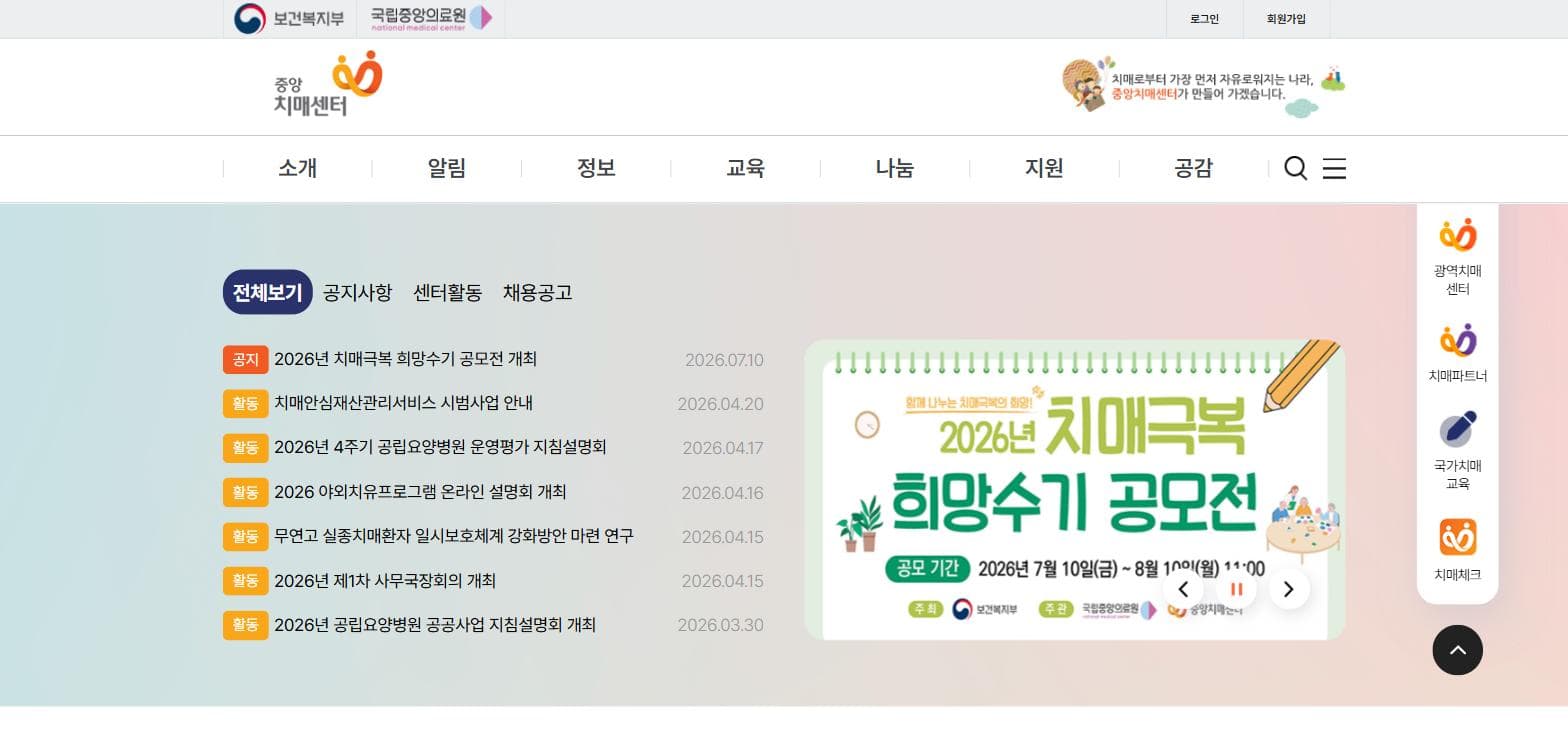
Dementia Relief Center
A comprehensive dementia support organization set up at public health centers nationwide, offering free dementia screening tests, counseling, and case management
Weekdays 09:00-18:00 (varies by center)
Operated by · 중앙치매센터
Cost · Free
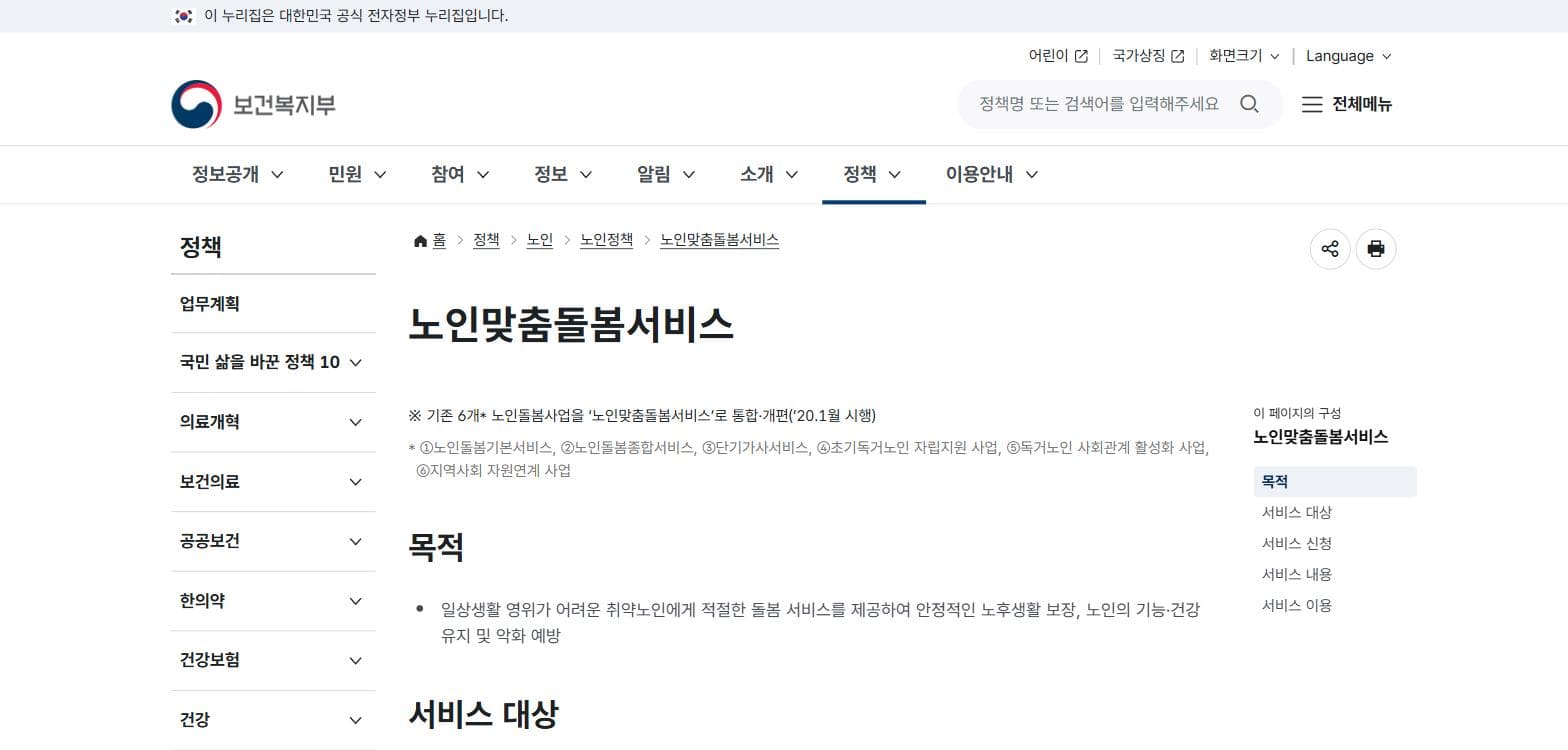
Personalized Senior Care Service
A care service that regularly visits and checks on older adults living alone, providing safety and daily-life support
Applications at the town/township/neighborhood administrative welfare center, weekdays 09:00-18:00
Operated by · 보건복지부
Cost · Free
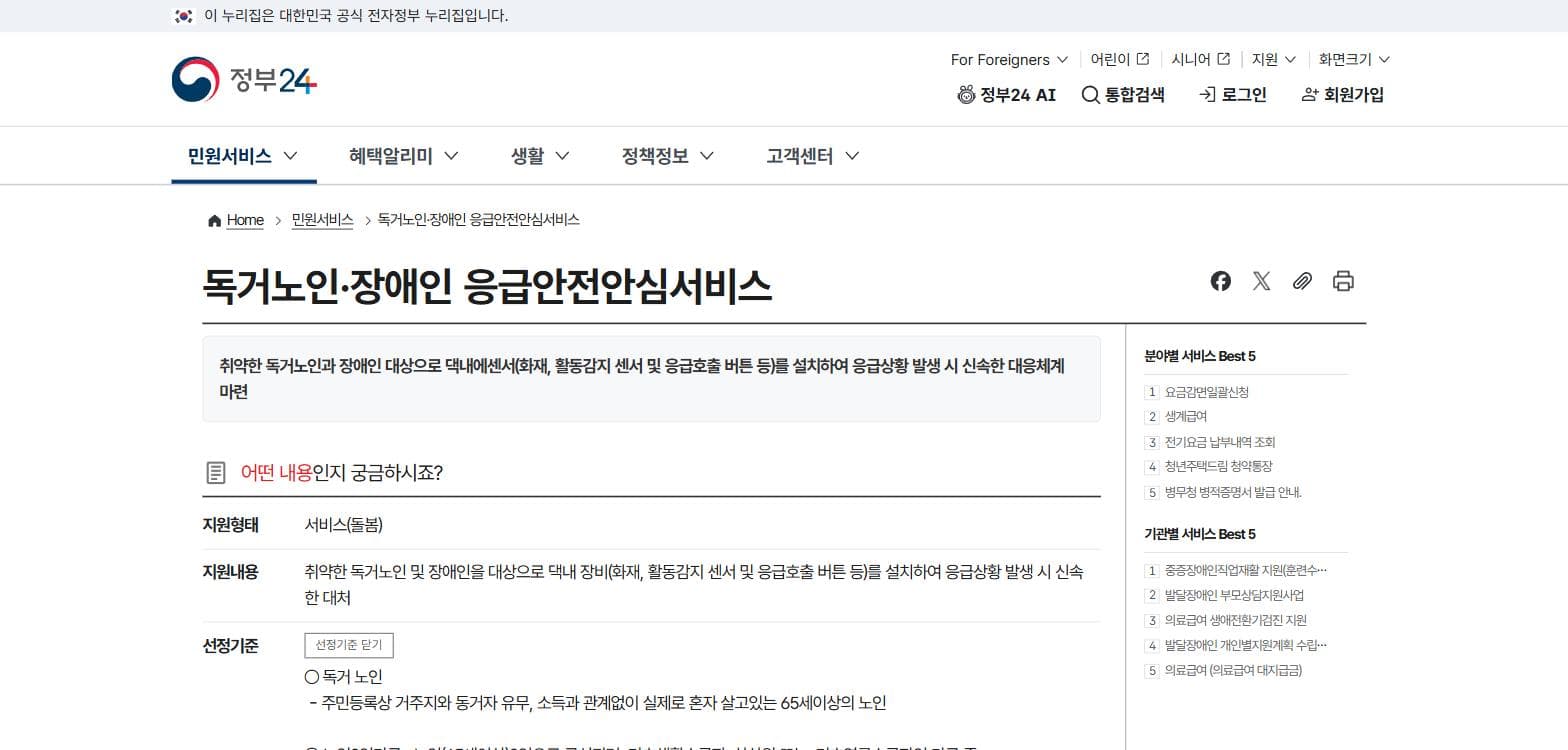
Emergency Safety Confirmation Service for Seniors and People with Disabilities Living Alone
A service that installs a fire detector and emergency call device free of charge in the home of a senior living alone, providing 24-hour remote monitoring for emergencies
24 hours (applications at the town/township/neighborhood administrative welfare center, weekdays 09:00-18:00)
Operated by · 보건복지부
Cost · Free
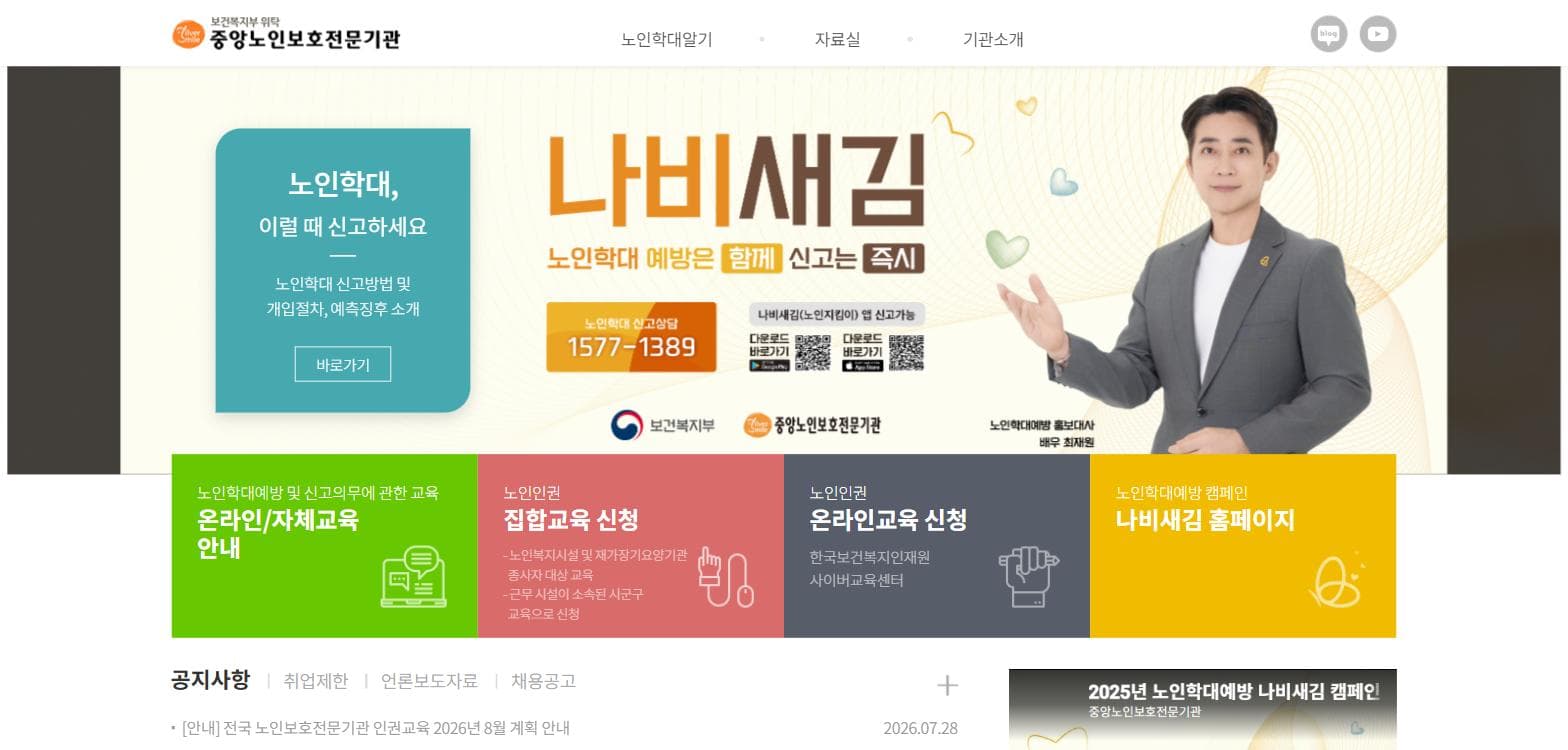
Elder Abuse Report Line (1577-1389)
A 24-hour reporting and counseling service where a single toll-free call connects you to the regional Senior Protection Agency with jurisdiction over the case of elder abuse
24 hours
Operated by · 중앙노인보호전문기관
Cost · Free
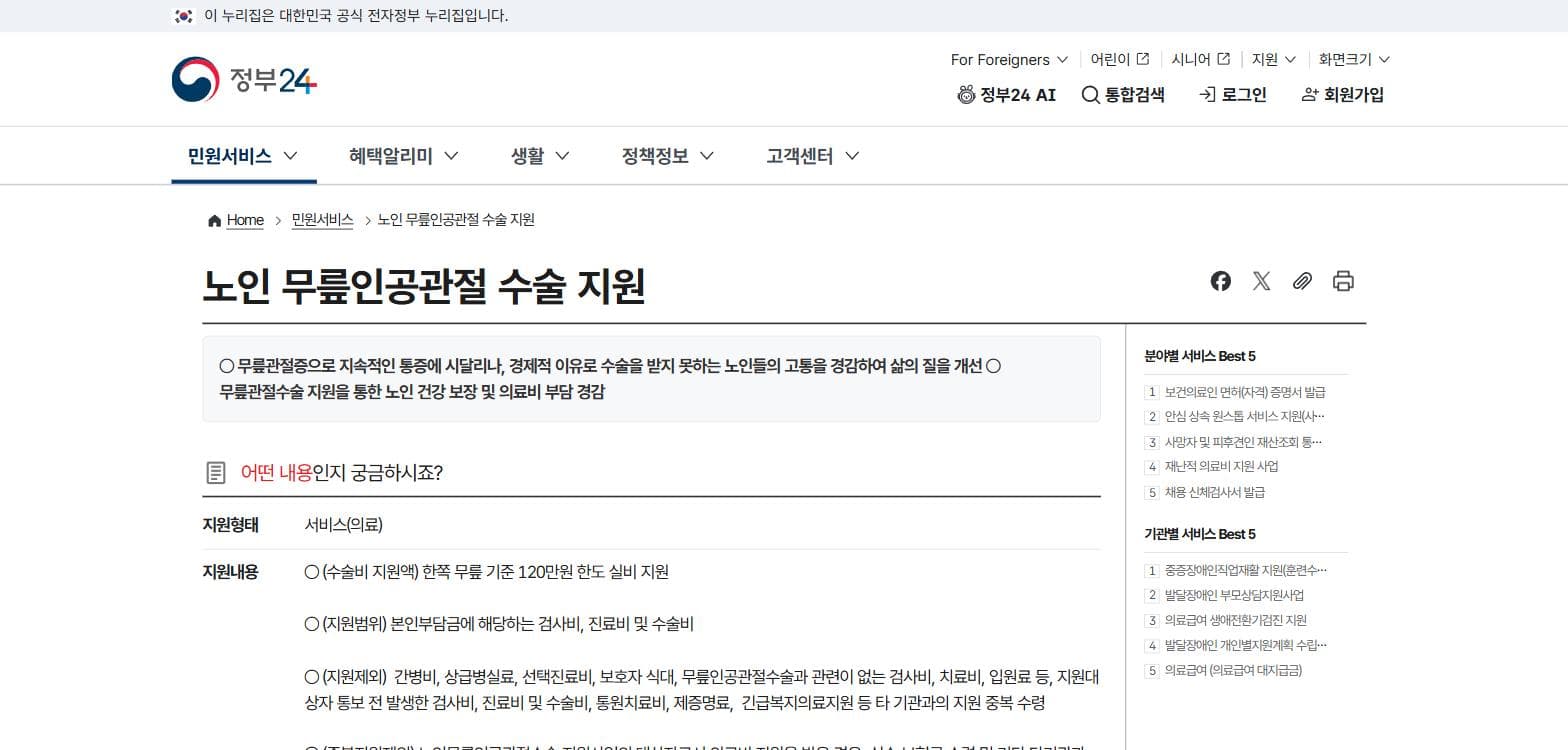
Knee Replacement Surgery Cost Support for Seniors
A Ministry of Health and Welfare-commissioned program supporting knee replacement surgery costs for low-income seniors
Applications at public health centers (inquiries: Korea Elderly Medical Sharing Foundation 1661-6595)
Operated by · 노인의료나눔재단(보건복지부)
Cost · Paid