
A car accident is disorienting for anyone, so knowing the order of what to do at the scene ahead of time can spare you a lot of unfair outcomes later.
1Step 1 — People first, then documentation
If anyone is injured, call 112 or 119 immediately before anything else. Once the scene is safe, take photos and video of the accident scene, the vehicle damage, and the state of the traffic lights/lane markings, and get the other party's contact information and insurer. This record becomes decisive evidence later if you need to dispute the fault ratio.
2Step 2 — If you disagree with your insurer's fault ratio, don't just let it go
If you find it hard to accept the fault ratio your insurer proposed, you don't have to accept it as final. You can't apply directly as the party involved, but if you raise an objection and request a re-review with your own insurer, they will submit it for free review to the Motor Vehicle Accident Fault Ratio Dispute Review Committee, run under the Korea Non-Life Insurance Association. Expert reviewers re-examine the case using evidence like dashcam footage and photos — many people don't realize this is a way to get the ratio reassessed without going to court.
3Step 3 — If you need more information on the other vehicle or accident-confirmation documents
If you need an accident confirmation document or the other vehicle's traffic violation history for insurance processing or legal action, you can handle the relevant civil petition through the Korean National Police Agency's Traffic Civil Petition 24 (eFine). If a vehicle defect is suspected as the cause of the accident, you can also check the Motor Vehicle Recall Center for any recall history on that model.
4Step 4 — If the at-fault driver is uninsured or fled the scene
If the at-fault vehicle has no insurance at all, or fled the scene so you don't even know who it was, there is no insurer to file a claim against. For situations like this, the government runs a separate Motor Vehicle Damage Compensation Guarantee Program (Government Guarantee Program) that pays victims a minimum level of compensation directly. If you were injured in a hit-and-run or uninsured-vehicle accident, checking this program first can help you recover at least some of your treatment costs and losses.
Services mentioned in this guide
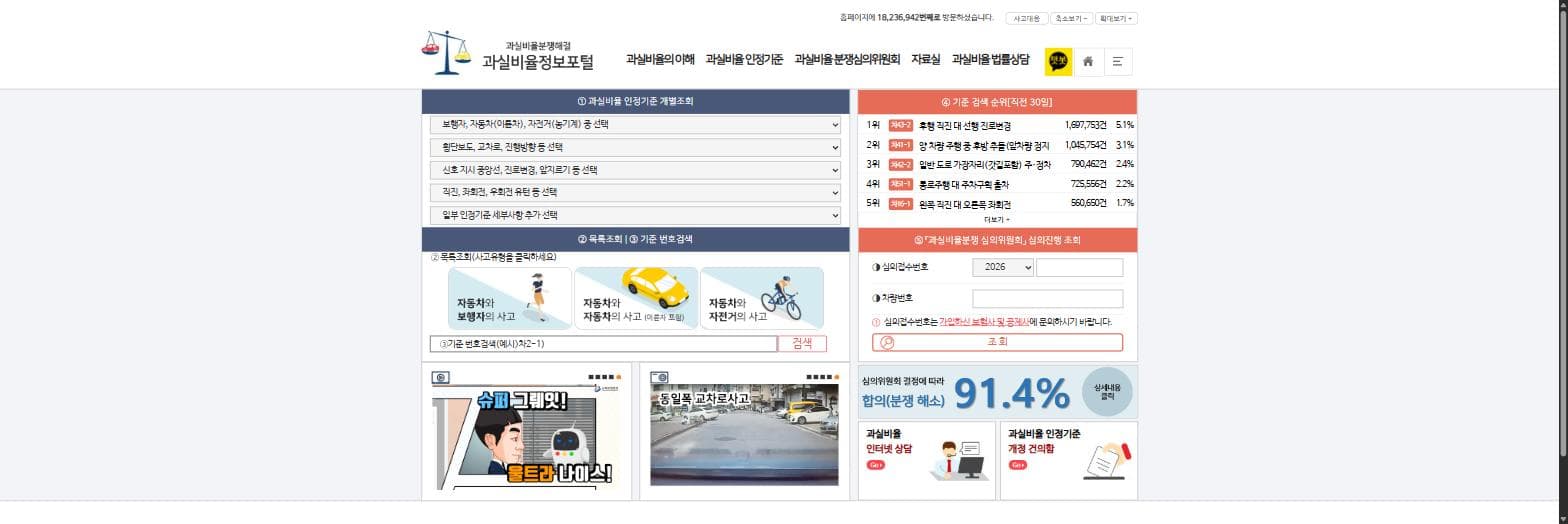
Motor Vehicle Accident Fault Ratio Dispute Review Committee
A service for searching a traffic-accident scenario to check the expected fault ratio, and getting a fault-ratio dispute with your insurer mediated for free
Lookup 24 hours, counseling weekdays 09:00-18:00
Operated by · 손해보험협회
Cost · Free
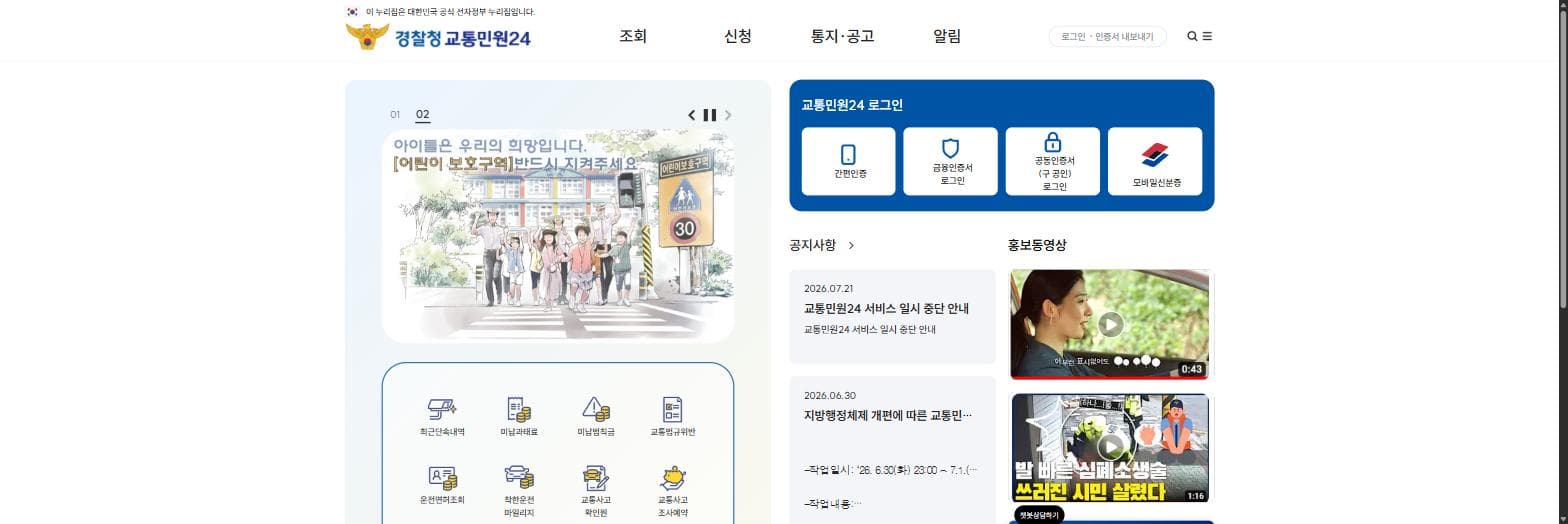
Korean National Police Agency Traffic Civil Petition 24 (eFine)
The Korean National Police Agency's official service for checking traffic-violation enforcement records and driver's license penalty points, and looking up and paying fines/administrative fees online
24 hours (counseling line 182)
Operated by · 경찰청
Cost · Free
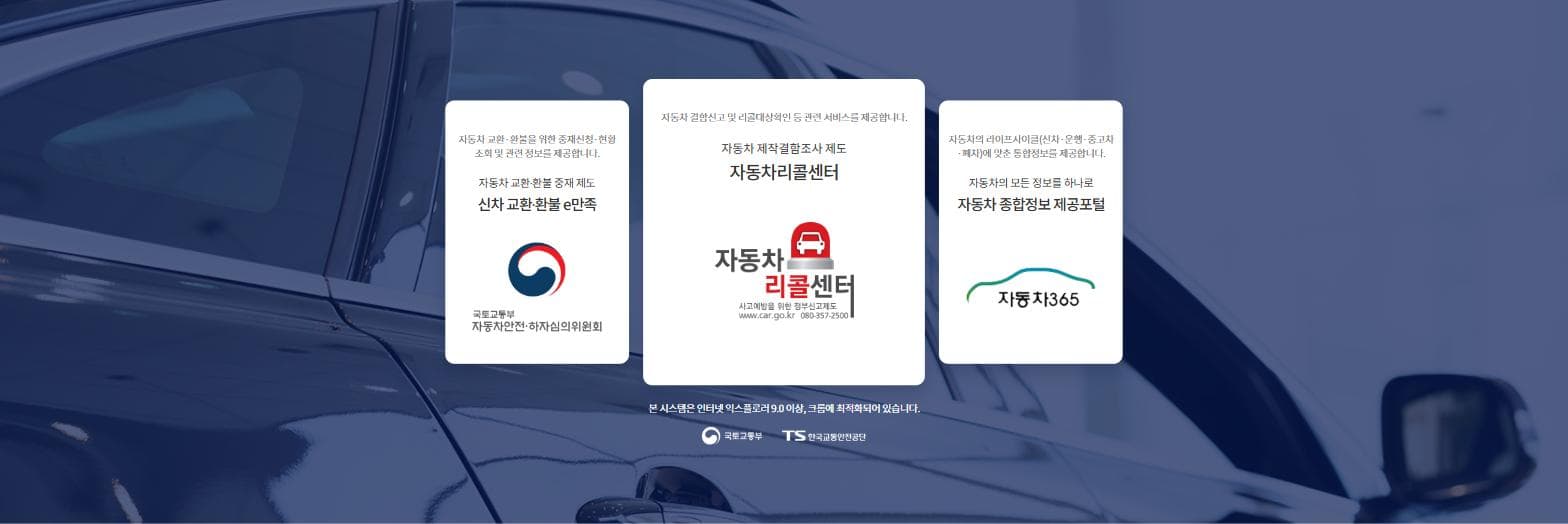
Motor Vehicle Recall Center
A Ministry of Land, Infrastructure and Transport service for checking whether your car is subject to a recall, and reporting online right away if you suspect a defect
24 hours
Operated by · 국토교통부·한국교통안전공단
Cost · Free
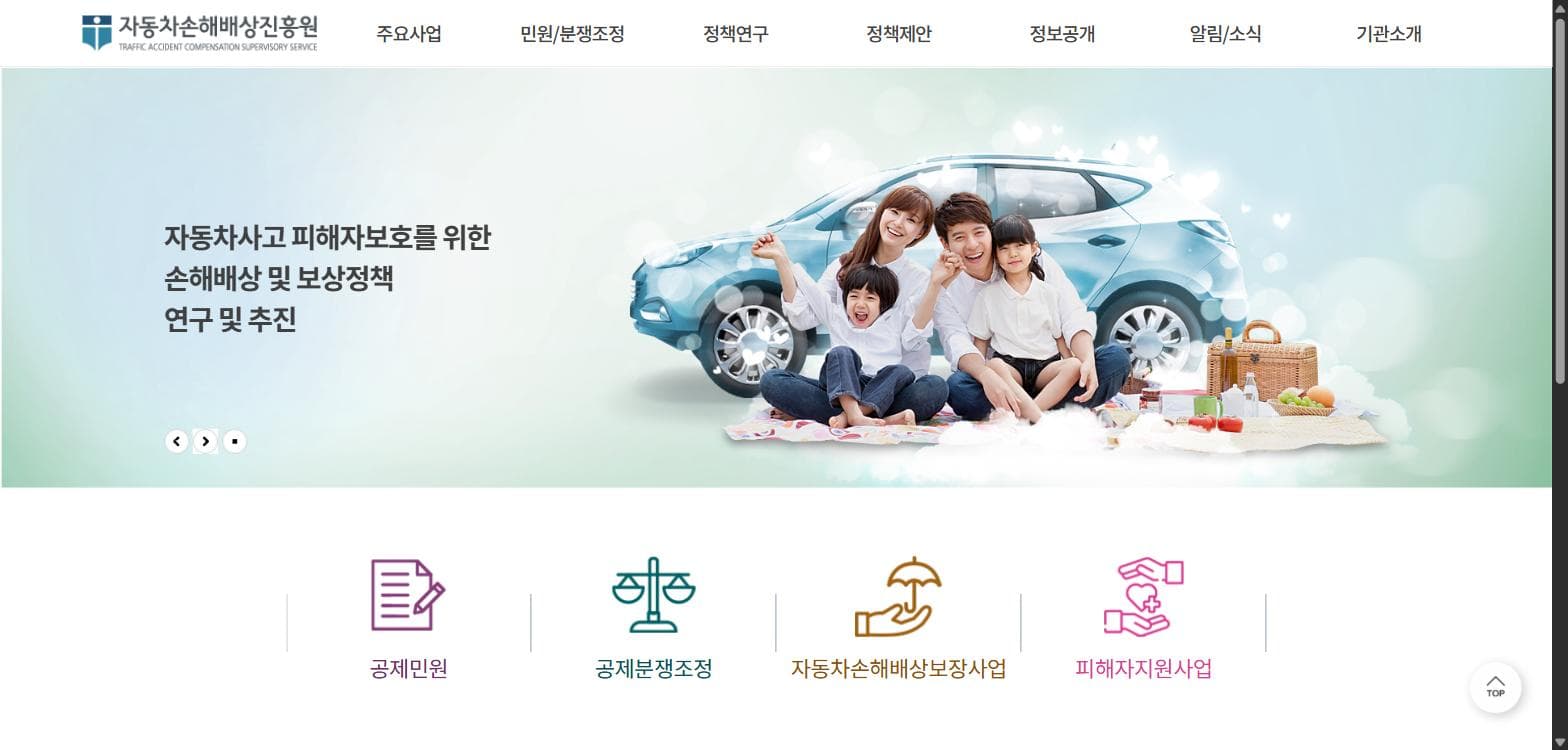
Motor Vehicle Damage Compensation Guarantee Program (Government Guarantee Program)
A program in which the government compensates victims who have no way to be compensated by the at-fault party - such as in hit-and-run or uninsured-vehicle accidents
Counseling weekdays 09:00-18:00 (online submission 24 hours)
Operated by · 자동차손해배상진흥원
Cost · Free