
Non-covered treatments not covered by national health insurance — like manual therapy, MRIs, or dental implants — have prices hospitals set on their own, so the same procedure can cost very different amounts at different hospitals. Here is what to check before a surgery or procedure, and what to do afterward if something goes wrong.
1Before surgery — compare non-covered treatment costs first
The Health Insurance Review and Assessment Service's Non-Covered Treatment Cost Information lets you look up hospital-by-hospital prices for non-covered items like manual therapy, MRIs, dental implants, and cataract surgery, and compare them against the average price at medical institutions of similar size in the same region. You can look up the same information on the Health e-Eum mobile app, along with hospital quality ratings by condition and procedure — useful for avoiding overpaying before you choose a hospital.
2If you suspect a medical accident
If you feel something went wrong with your treatment, you can request counseling and mediation from the Korea Medical Dispute Mediation and Arbitration Agency before preparing for a lawsuit. A mediation decision is required within 90 days of the start of proceedings — extendable by 30 days if needed, for a maximum of 120 days — making it faster than going to court. The filing fee starts at 22,000 won depending on the amount of damages claimed, and is waived for basic livelihood recipients and national merit recipients. If the patient died, was unconscious for a month or longer, or suffered a severe disability, mediation proceedings start automatically even without the hospital's consent.
3In short
- Facing surgery or a procedure → compare hospital-by-hospital prices first in the Non-Covered Treatment Cost Information
- An accident already happened, or you feel something's wrong with the outcome → start with counseling and a mediation request at the Medical Dispute Mediation and Arbitration Agency
Services mentioned in this guide
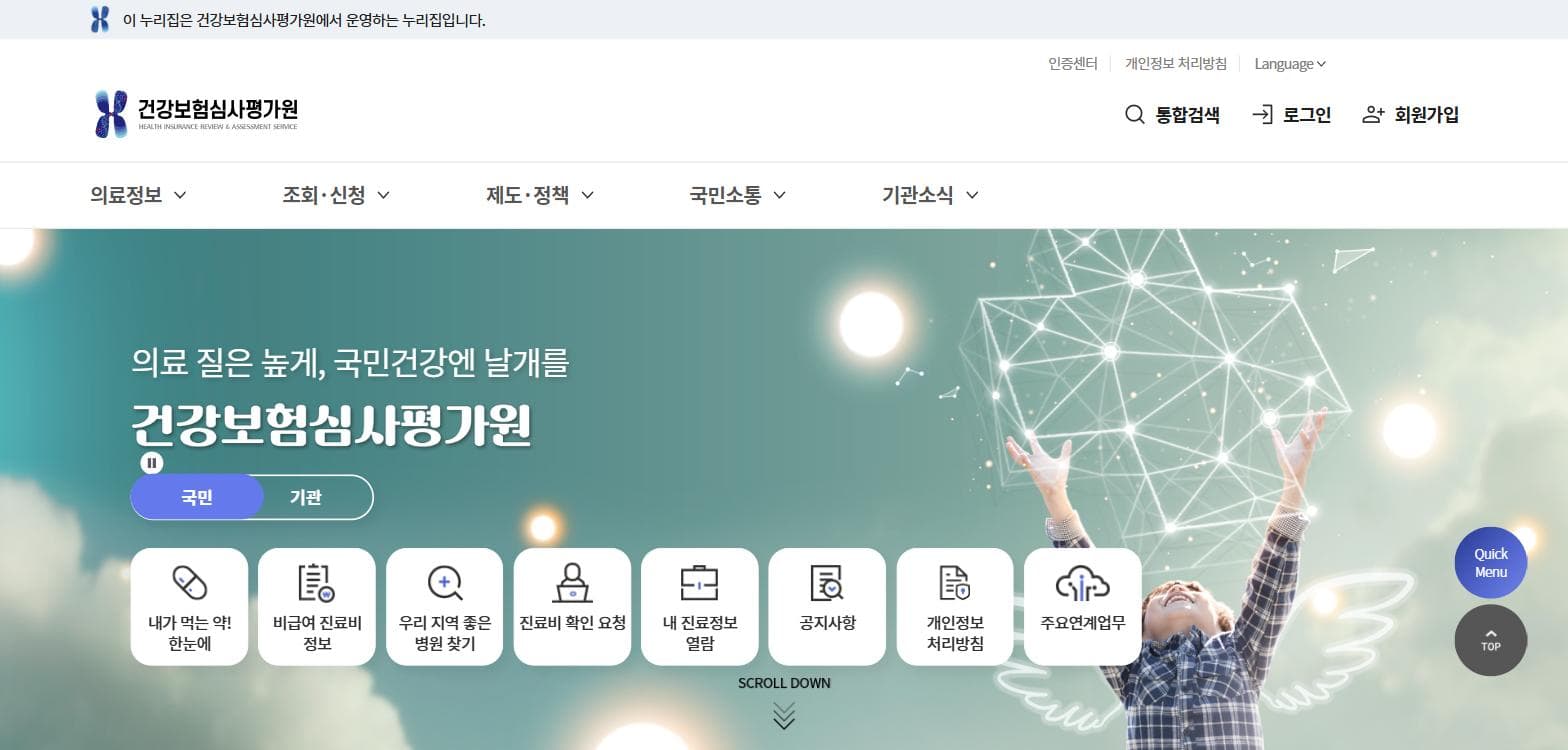
Health Insurance Review and Assessment Service - Non-Covered Treatment Cost Information
A service for comparing and looking up hospital costs for non-covered items (such as manual therapy, MRI, and implants)
24 hours
Operated by · https://www.hira.or.kr
Cost · Free

Korea Medical Dispute Mediation and Arbitration Agency
A service offering free counseling and mediation/arbitration, without litigation, when a medical accident or dispute occurs
24 hours (counseling line: weekdays 09:00-18:00)
Operated by · 한국의료분쟁조정중재원
Cost · Free